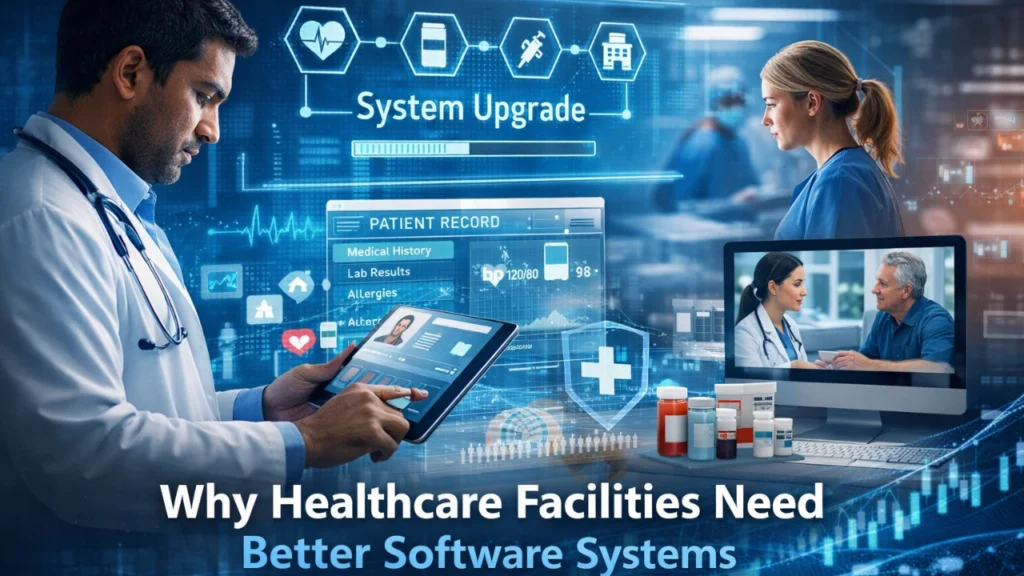
Walk into any hospital or clinic today, and you’ll see something interesting. Doctors carry smartphones. Nurses use tablets. Medical equipment connects to the internet. Yet many healthcare facilities still rely on outdated software systems that slow everything down.
It’s 2026, and the gap between what technology can do and what many healthcare facilities actually use is growing wider. This isn’t just about keeping up with trends. It’s about patient safety, staff efficiency, and the quality of care we can provide.
Let’s talk about why upgrading your healthcare software systems isn’t optional anymore—it’s essential.
The Real Cost of Outdated Systems
Old software doesn’t just run slower. It creates real problems that affect everyone.
Think about a typical day with outdated systems. A nurse spends 15 minutes trying to access a patient’s medication history because the system keeps freezing. A doctor can’t see lab results because they’re stuck in a different system that doesn’t talk to the main one. The pharmacy team manually enters prescriptions because there’s no connection between departments.
These aren’t just minor inconveniences. They add up to:
Wasted time. Staff spend hours doing tasks that modern systems could automate in minutes. That’s time taken away from patient care.
More errors. Manual data entry means more mistakes. A misread prescription or wrong dosage can have serious consequences.
Frustrated staff. When people fight with technology all day, burnout increases. Good employees leave. Morale drops.
Poor patient experience. Long wait times, repeated questions, and delayed results frustrate patients who expect better in today’s digital world.
The hidden costs pile up quickly. Yes, new software requires investment upfront. But the ongoing cost of keeping broken systems? That’s often much higher.
Patient Safety Starts With Good Software
Here’s what matters most: better software systems save lives.
When a patient arrives at the emergency room, doctors need instant access to their complete medical history. Allergies, current medications, previous conditions, recent lab work—all of it matters.
With modern, connected systems, this information appears in seconds. A doctor can see that the patient is allergic to penicillin before prescribing it. They can check if a new medication will interact badly with what the patient already takes. They can view recent test results without ordering duplicate tests.
Legacy systems make this hard or impossible. Information sits in different databases that don’t communicate. Staff waste precious time hunting for records. In emergencies, every second counts.
Good software also reduces medication errors, which remain one of the biggest safety issues in healthcare. When prescription systems connect directly to pharmacy systems, the chance of mistakes drops dramatically. The right dose reaches the right patient at the right time.
Speaking of pharmacies, facilities in regions like Oman are seeing significant improvements by implementing modern pharmacy management software in Oman that integrates seamlessly with other hospital systems.
Better Data Means Better Decisions
Healthcare generates massive amounts of data every single day. Patient records, test results, treatment outcomes, medication responses—it’s all valuable information.
But data only helps if you can actually use it.
Modern healthcare software systems turn raw data into actionable insights. Instead of digging through paper files or multiple disconnected databases, you can:
Spot trends quickly. Notice that certain treatments work better than others. Identify potential outbreaks before they spread. Track which processes cause bottlenecks.
Make informed choices. Base decisions on real evidence from your own facility, not just general guidelines.
Improve continuously. Measure outcomes, adjust approaches, and see what works. This is how healthcare quality improves over time.
Plan resources better. Predict busy periods, manage inventory efficiently, and schedule staff where they’re needed most.
Old systems trap this valuable data in formats you can’t easily analyze. You know the information exists somewhere, but accessing it requires manual work that nobody has time for.
Staff Efficiency and Satisfaction
Your healthcare team didn’t train for years to spend half their day fighting with computers.
Modern software systems give time back to healthcare professionals. Automated workflows handle routine tasks. Integrated systems eliminate duplicate data entry. Smart scheduling reduces conflicts. Easy-to-use interfaces mean less training time and fewer support calls.
When systems work smoothly, staff can focus on what they do best: caring for patients.
This matters for retention too. Healthcare workers are in high demand everywhere. Facilities with efficient, modern systems attract better talent and keep good people longer. Nobody wants to work somewhere that makes simple tasks unnecessarily difficult.
Meeting Patient Expectations
Today’s patients expect a certain level of digital convenience. They book restaurant reservations online, They track packages in real-time & They manage their banking from their phones.
Then they visit a healthcare facility and… wait days for test results that could be shared instantly. Fill out the same forms they completed last visit. Call repeatedly to schedule appointments because online booking doesn’t exist.
Better software systems help healthcare catch up with other industries:
- Patient portals let people access their own records, view test results, request prescription refills, and message their care team.
- Online scheduling reduces phone tag and makes booking appointments as easy as booking a hotel room.
- Automated reminders decrease no-shows and help patients stay on track with treatment plans.
- Telehealth integration expands access to care, especially for follow-ups that don’t require in-person visits.
These aren’t luxury features anymore. They’re becoming baseline expectations.
Compliance and Security
Healthcare data is sensitive. Regulations around patient privacy keep getting stricter, and for good reason.
Modern software systems build security and compliance in from the start. Automatic encryption, detailed audit trails, role-based access controls, regular backups—these features protect patient information and keep your facility compliant with regulations.
Older systems often struggle with current security standards. They may not receive updates anymore. They might lack basic protections that newer systems include by default. This puts patient data at risk and exposes your facility to regulatory problems.
The Integration Challenge
One of the biggest issues with outdated systems? They don’t play well with others.
A hospital might have separate systems for:
- Patient records
- Laboratory results
- Radiology imaging
- Pharmacy management
- Billing and insurance
- Appointment scheduling
When these systems don’t talk to each other, information gets lost. Staff waste time transferring data manually between systems. Patients get frustrated repeating the same information to different departments.
Modern healthcare software emphasizes integration. Systems share data seamlessly. A prescription entered in one system automatically appears in the pharmacy system. Lab results flow directly into patient records. Billing information updates when treatments are documented.
This connected approach doesn’t just save time. It creates a complete picture of each patient’s care journey.
Making the Change
Upgrading healthcare software systems feels overwhelming. The cost seems high. The disruption seems risky. The learning curve seems steep.
But staying with systems that don’t work? That’s the bigger risk.
Start by identifying your biggest pain points. Where do staff waste the most time? Where do errors happen most often? What frustrates patients most?
Focus there first. You don’t have to replace everything at once. Many facilities take a phased approach, updating critical systems first and building from there.
Look for solutions designed specifically for healthcare. Generic software won’t cut it. You need systems built around healthcare workflows, compliance requirements, and patient safety standards.
Moving Forward
Better software systems aren’t about fancy technology for its own sake. They’re about providing better care, more efficiently, with fewer errors and better outcomes.
Your patients deserve it. Your staff deserve it. And in 2026, the technology to make it happen is available and proven.
The question isn’t whether to upgrade your healthcare software systems. It’s how quickly you can make it happen.
Because every day you wait is another day of wasted time, increased errors, and frustrated people—both staff and patients.
The future of healthcare is connected, efficient, and patient-centred. The software systems you choose today determine whether your facility will be ready for that future.